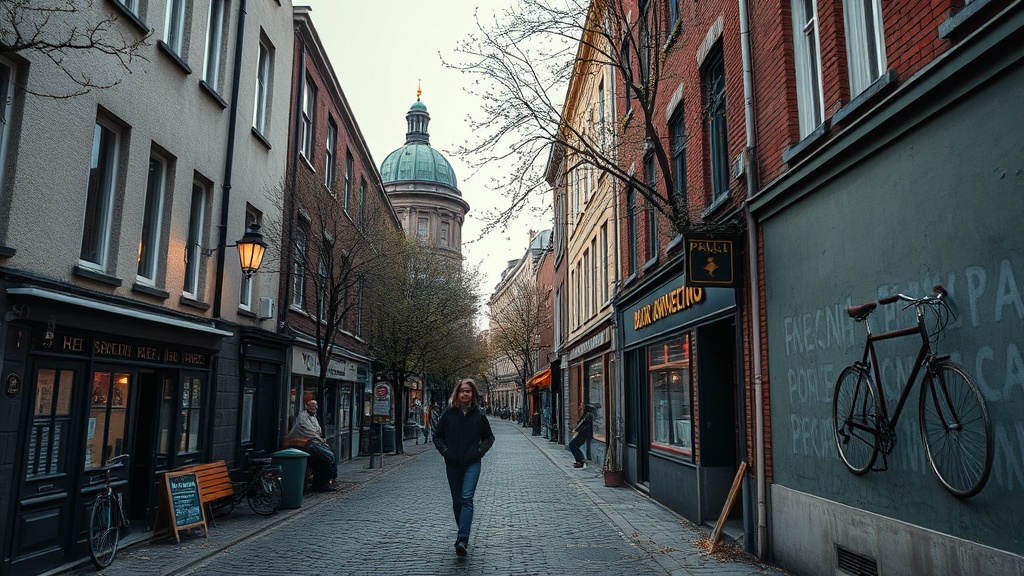
6 Wandering Paths Through Berlin's Most Unusual Neighborhoods

The Gritty Charm of Friedrichshain
Kreuzberg's Multicultual Pulse
The Bohemian Spirit of Prenzlauer Berg
Neukölln's Hidden Canal Vibes
Charlottenburg's Elegant History
Wedding's Industrial Uniqueness
This guide explores six distinct neighborhoods in Berlin that defy the typical tourist expectations of a German capital. You'll find specific walking routes through areas known for their gritty history, underground art scenes, and unconventional residential layouts. Each path focuses on a different cultural-identity of the city, from the industrial edges to the bohemian centers.
1. The Gritty Industrialism of Oberschöneweide
Oberschöneweide offers a look at Berlin's industrial past through its massive, repurposed brick factory complexes. Most people stick to Mitte or Kreuzberg, but this area on the southeast edge of the city tells a much older story of manufacturing and labor. It’s a place where the architecture feels heavy and permanent.
Walking through the Spree riverfront here, you'll see how the old industrial buildings have been converted into studios and tech hubs. It isn't pretty in the traditional sense—there are no manicured parks or gold-domed churches here—but the sheer scale of the brickwork is impressive. If you enjoy industrial photography, this is your playground. You'll see many of the structures that once housed the massive electrical-engineering firms that defined the region's economy.
One of the best ways to experience this is to walk the path alongside the Spree. It’s quiet, slightly desolate, and incredibly atmospheric. You might see a few artists working in a studio that used to be a turbine hall. It's a stark contrast to the polished vibe of the city center.
2. Where is the best place for street art in Berlin?
The RAW-Gelände in Friedrichshain is widely considered the best place to see high-density, high-quality street art and urban-culture-driven architecture in the city.
This area is a former industrial complex that has been completely overtaken by subculture. It's a maze of metal structures, graffiti-covered walls, and climbing gyms. It feels alive, even when it's empty. You can spend an hour just looking at the layers of spray paint on the walls—it's like an outdoor museum that changes every week.
A typical walk through RAW-Gelände includes:
- Walking through the central courtyard to see the heavy metal-work and graffiti.
- Observing the climbing walls built into the side of old industrial structures.
- Checking out the small, independent music venues that occupy the smaller rooms.
The vibe is unapologetically loud and messy. Don't expect a quiet stroll. It's a high-energy environment where the art is often temporary and subject to the weather or the next artist with a spray can. It's a perfect example of how Berlin repurposes its "dead" spaces for new, creative lives.
3. The Bohemian Spirit of Neukölln
Neukölln is a neighborhood defined by its constant state of flux. It's a mix of old-school Berlin grit and a rapidly changing demographic of international residents. The streets here feel narrower and more intimate than the wide bouches of Mitte. It’s a place where you can find a coffee shop next to a vintage clothing store that looks like it hasn't been cleaned since 1985.
The best path through Neukölln starts near the Landwehr Canal. Walking along the water provides a moment of calm before you dive into the denser, more chaotic streets of the north part of the district. You'll see people sitting on the canal edge with cheap drinks—a quintessential Berlin scene.
The neighborhood is a melting pot. You'll hear several languages within a single block. It's a place where tradition meets the contemporary. While some might call it gentrification, others see it as a natural evolution of a city that never stays still. Just keep an eye on your wallet in the more crowded areas, but generally, it's a very welcoming place for a wanderer.
4. How much does a day of exploring Berlin cost?
A budget for a day of exploring Berlin's unusual neighborhoods can range from €20 to €60 depending on your appetite for coffee and local craft beer.
Berlin remains one of the more affordable major European capitals, but prices are climbing. If you stick to the street food and the public transit system, you can keep costs very low. The VBB public transport association provides excellent coverage for the entire city, and a single-day pass is a smart move if you're jumping between neighborhoods like Neнокölln and Oberschöneweide.
| Item Type | Estimated Cost (Low) | Estimated Cost (High) |
|---|---|---|
| Street Food (Döner/Currywurst) | €5 - €8 | €12 |
| Local Craft Beer/Coffee | €4 | €9 |
| Public Transport (Daily Pass) | €9.90 | €10.50 |
| Museum/Gallery Entry | €0 (Free galleries) | €15 |
Note that many of the best "museums" in these neighborhoods are actually just the streets themselves. You don't necessarily need to pay for a ticket to see the best parts of the RAW-Gelände or the industrial architecture of the east.
5. The Quiet Architecture of Hansaviertel
The Hansaviertel district is a masterpiece of modernist urban planning that feels completely disconnected from the rest of the city's chaos. It was rebuilt after World War II as a showcase of modern living, and the result is a collection of sleek, mid-century buildings surrounded by greenery. It's a quiet, somewhat sterile, but beautiful place to walk.
The architecture here is the main draw. You'll see buildings designed by famous architects that prioritize light and space. It's a stark departure from the heavy, dark brickwork you see in Oberschöneweide. The streets are wider, the trees are taller, and the pace of life feels significantly slower. It's an excellent place for a contemplative walk.
It's a bit of a hidden gem because most people don't realize how much history is tucked into these residential blocks. It’s not a "tourist" area in any sense of the word. You won't find many souvenir shops here—just people living their lives in a very intentional, designed environment. It’s a fascinating study in how urban design can dictate the "mood" of a neighborhood.
6. Exploring the Shadows of Tempelhofer Feld
Tempelhofer Feld is more than just a park; it's a massive, decommissioned airport that has been turned into a public space. It is one of the most unusual urban features in the world. Walking on the actual runways of an airport while people are cycling or skating around you is a surreal experience.
The scale is what hits you first. It is vast. It is empty. It is exhilarating. The wind hits you harder here than anywhere else in the city. It's a place where the scale of human achievement (the airport) meets the scale of human leisure (the park).
I highly recommend visiting at sunset. The way the light hits the old control towers is something special. It’s a great place to just walk without a destination. You can follow the old runways for miles. It's a rare bit of breathing room in a dense metropolis. If you want to see how Berliners actually use their public space, this is the place to be.
For those interested in the history of the site, the Wikipedia entry on Tempelhof Airport provides a deep dive into its role during the Berlin Airlift. It's a heavy piece of history that still feels present in the very air of the field.
While exploring these areas, remember that Berlin is a city of layers. What looks like a derelict building might be a high-end studio, and what looks like a quiet street might be the heart of a massive cultural movement. Don't be afraid to take the wrong turn—that's usually where the best stories are. If you enjoyed these urban paths, you might also find interest in exploring the secret courtyards of Prague, which offer a similar sense of hidden discovery in a European capital.