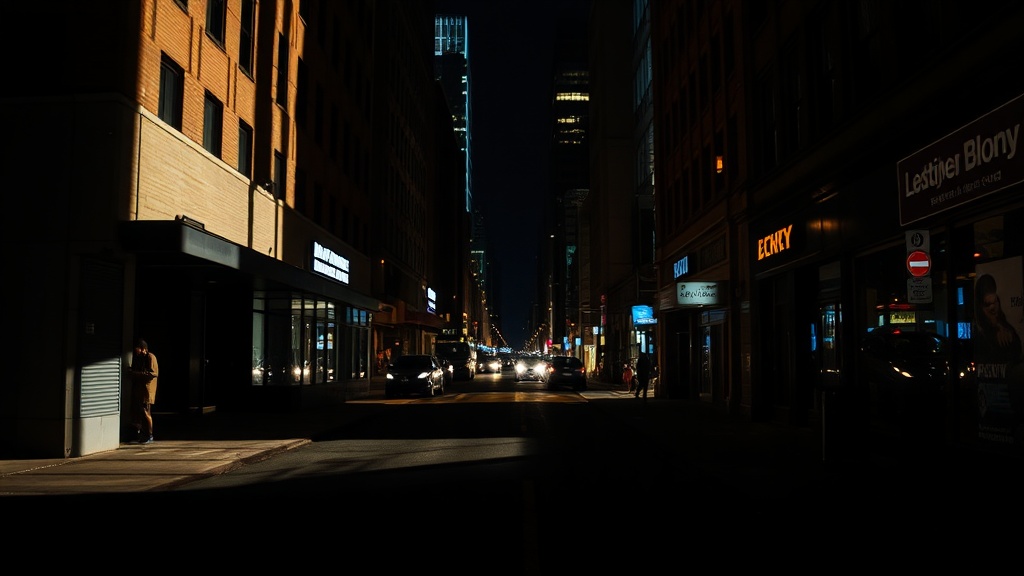
Chasing Shadows and Light in Urban Photography
A street photographer stands on a corner in London, waiting for a single red double-decker bus to pass a specific shadow cast by a Victorian building. The sun hits a puddle just right, reflecting a neon sign from a nearby pub, and for a split second, the chaos of the street turns into a high-contrast masterpiece. This isn't just about clicking a button; it's about timing. This post breaks down how to use high-contrast light and deep shadows to capture the mood of a city, focusing on technical settings, timing, and gear choices.
Urban environments are messy. They are loud, bright, and often visually overwhelming. If you try to photograph a city at high noon with a standard wide-angle lens and no plan, you'll likely end up with a flat, boring image that lacks character. To get those striking, moody shots you see in professional street photography, you need to stop looking at the light and start looking at the shadows.
What is the Best Time for Urban Photography?
The best time for urban photography is during the "Golden Hour" or the "Blue Hour"—the periods shortly after sunrise and just before sunset. During these windows, the sun is low in the sky, creating long, dramatic shadows that add depth to flat city streets. If you're shooting in a dense metropolis like New York or Tokyo, these times are even more vital because the buildings themselves act as light modifiers.
When the sun is directly overhead, shadows are short and harsh. This usually results in "raccoon eyes" on pedestrians and blown-out highlights on white concrete. On the flip side, shooting during the blue hour—that period of twilight when the sky turns a deep cobalt—allows you to capture the glow of street lamps and neon signs against a soft, dark background. It's a different vibe entirely.
Here is a quick breakdown of how light changes your shot:
| Time of Day | Light Quality | Best Subject Matter |
|---|---|---|
| Golden Hour | Warm, soft, long shadows | Architecture, street portraits, texture |
| High Noon | Harsh, vertical, high contrast | Minimal (unless shooting hard shadows) |
| Blue Hour | Cool, diffused, ambient glow | Neon signs, street lights, motion blur |
| Night | Artificial, directional, high grain | Light trails, wet pavement, nightlife |
How Do I Use Shadows to Create Depth?
You use shadows by treating them as physical objects in your frame rather than just "dark spots." In a city, shadows can be used to lead the eye toward a subject or to hide distracting elements that would otherwise ruin a composition. A well-placed shadow can turn a cluttered sidewalk into a minimalist piece of art.
Think about the way light hits a narrow alleyway in a historic district. If you position your camera to catch a beam of light cutting through the dark, the viewer's eye is naturally pulled toward that brightness. This is a classic technique used in film noir-style photography. It works because the human brain is wired to seek out light in dark spaces.
Try these three techniques to master shadow play:
- The Silhouette: Place your subject directly in front of a bright light source (like a sunset or a bright shop window) and underexpose the shot. This turns your subject into a dark shape, emphasizing their outline rather than their features.
- Leading Lines: Use the long shadows cast by railings, benches, or even people to point toward your main subject.
- Negative Space: Don't be afraid of "black" areas. A large, dark shadow can serve as negative space that makes a single bright element—like a yellow taxi or a person in a red coat—pop.
If you're traveling and need to keep your gear light, you might be looking at how to pack efficiently. I've written about building a practical packing list for long trips, which is helpful if you're carrying multiple lenses for different lighting conditions.
Which Camera Settings Work Best for High Contrast?
To capture high-contrast urban scenes, you should primarily use a faster shutter speed and a lower ISO to maintain clarity. If you're shooting in low light, you'll need to balance the trade-off between noise and motion blur. Most professional street photographers prefer a setting that preserves the highlights without losing all the detail in the shadows.
When the light is changing rapidly—like when a cloud passes over the sun—your camera's auto-exposure might struggle. It'll try to "fix" the darkness by brightening the whole image, which often results in a washed-out look. I usually switch to Manual (M) or Aperture Priority (Av/A) mode to maintain control. This ensures that the shadows stay dark and the highlights don't become a white mess.
A few gear tips for these situations:
- Use a Polarizing Filter: A Circular Polarizer can help manage reflections on glass buildings or wet pavement, which is common in cities.
- Shoot in RAW: This is non-negotiable. RAW files contain much more data in the shadows and highlights. If you blow out a shot in JPEG, you're stuck; in RAW, you can recover much of that lost detail in post-processing.
- Watch Your White Balance: In the city, you'll deal with mixed lighting—yellow street lamps mixed with blue moonlight. Setting a custom white balance or shooting in a neutral profile prevents the colors from looking "off."
It's easy to get lost in the technicalities, but don't forget the soul of the city. If you're wandering through a new place, you might find it helpful to look at finding the real rhythm of a new city through its streets rather than just its landmarks. The best shots often happen when you're not looking for them.
Shadows aren't your enemy. They are the texture of the city. Without them, a street is just a flat plane of light. With them, a street becomes a stage. Whether you're using a high-end mirrorless setup or just your smartphone, the goal is the same: find the tension between the light and the dark. Look for the way a shadow falls across a face, or how a single street lamp creates a circle of warmth in a cold, dark alley. That tension is where the story lives.
Don't be afraid to get low. A lot of people shoot from eye level, which is the most common perspective. If you drop down to the pavement, the shadows become even longer and more dramatic. You'll see the world from a different angle—literally. The perspective change alone can turn a standard street scene into something that feels cinematic and intentional.
The next time you're out, stop looking for "the subject" and start looking for the light. Wait for that moment when the sun dips below a skyscraper and a single beam hits a subway entrance. That's when you hit the shutter.